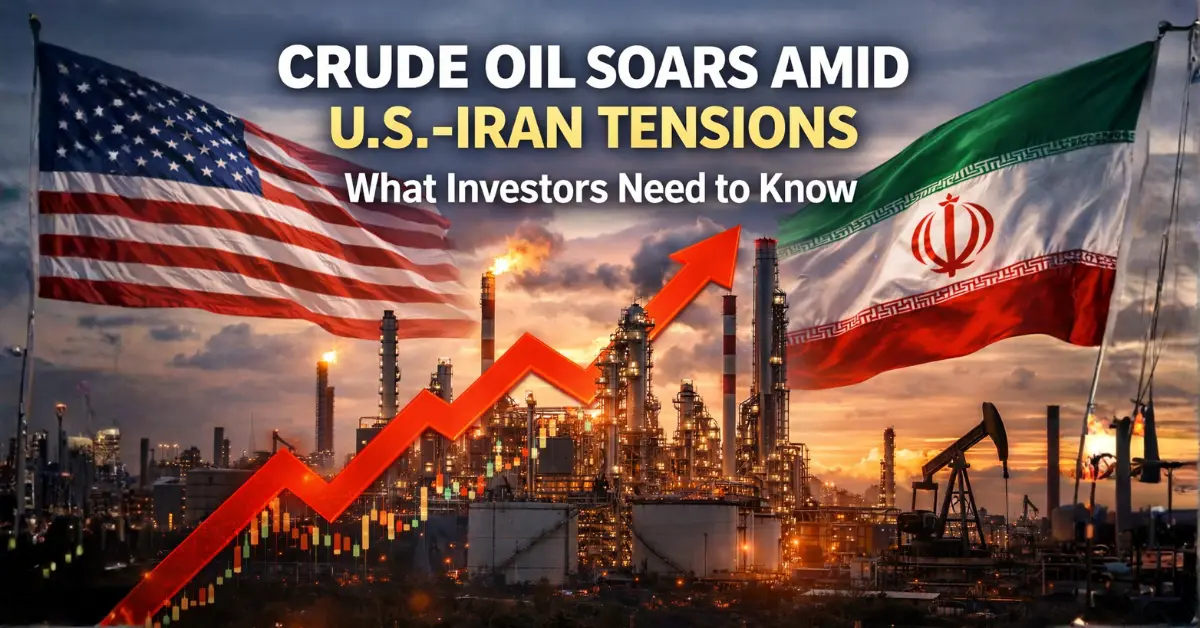
As tensions rise between the United States and Iran, oil prices are experiencing a significant uptick, reaching seven-month highs. This surge in prices is adding fuel to the fire for traders and investors alike, as geopolitical risks create new market dynamics. This blog explores how the U.S.–Iran crisis is affecting oil futures and the broader commodities market, as well as the potential impact on forex traders and investors.
Crude Oil Prices Near Multi-Month Highs
Oil prices have been driven to near seven-month highs with Brent crude hovering around $71.97 per barrel and WTI nearing $66.76 per barrel. The recent price hike is largely due to heightened fears of supply disruptions in the Middle East, especially concerning the Strait of Hormuz — a critical chokepoint for global oil shipments. With U.S.–Iran talks scheduled, any breakdown in diplomatic efforts could trigger further supply concerns, driving prices even higher.
Traders are already pricing in a geopolitical risk premium, making crude oil increasingly volatile. Geopolitical tensions in the region tend to push oil prices up as the market reacts to perceived supply risks.
Impact of Oil Prices on Inflation
Rising oil prices are beginning to disrupt global inflation patterns. As oil prices climb, they add pressure on transportation and energy costs, which could ripple through consumer prices worldwide. Oil, which had previously been a disinflationary force, is now seen as a contributor to inflationary pressures. This development poses challenges for central banks, especially the U.S. Federal Reserve, which may face more difficulty in curbing inflation through interest rate hikes if oil prices keep rising.
Goldman Sachs Adjusts Forecast for 2026
In light of the recent oil price surge, Goldman Sachs has updated its 2026 forecast, raising expectations for Brent crude to average around $64 per barrel. The investment bank attributes this upward revision to lower-than-expected OECD oil inventories. Goldman Sachs also expects the oil market to remain tight, with potential for more price volatility as geopolitical risks continue to evolve.
While Goldman Sachs remains cautious about U.S.–Iran relations, its forecast reflects the supply and demand dynamics that will continue to drive oil prices in the medium term.
Global Energy Stability and Market Impact
The broader geopolitical situation — especially between the U.S. and Iran — is crucial in determining the stability of the energy market. In case of a significant conflict, major powers like the U.S. and China will likely have to step in to stabilize global oil supplies. The U.S. Strategic Petroleum Reserve and China’s oil stockpiles may be key in moderating any major disruptions caused by Middle Eastern tensions.
Additionally, a sustained rise in oil prices would have implications not only for energy markets but also for forex markets. Commodity-linked currencies, like the Canadian Dollar (CAD) and Norwegian Krone (NOK), tend to benefit when oil prices rise, while safe-haven currencies like the U.S. Dollar (USD) or Swiss Franc (CHF) could see strength as investors seek shelter from volatility.
What This Means for Traders and Investors
With oil markets remaining volatile and geopolitical tensions potentially escalating, traders should be aware of both upside and downside risks. Technical analysis will play a crucial role for short-term traders, especially in forex pairs like USD/CAD, EUR/USD, or USD/JPY, which are influenced by changes in oil prices.
Long-term investors may look to positions tied to the oil and energy sectors, but should remain cautious of price swings as political developments unfold. Traders should also keep an eye on supply-demand fundamentals, as global inventories and production levels will continue to impact pricing in the months ahead.
Conclusion
Crude oil prices are at a critical juncture, driven by U.S.–Iran tensions and broader geopolitical risks. As markets digest these developments, volatility is expected to remain high. For investors, traders, and forex market participants, the next few weeks will be crucial in determining whether the recent rally is sustained or if diplomatic efforts will bring prices back down.